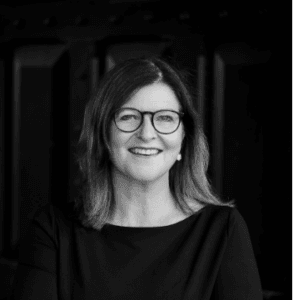
This month the blog at SIETAR UK features an interview with our Director of Communications, Vanessa Paisley. Vanessa shares where her journey in the intercultural field started, how the field is changing and what repatriation felt like for her. Her intercultural journey started a long way from her passport country and where she currently calls “home”.
How did your own intercultural journey begin?
I suppose my journey began at the very beginning – I was born in Tanzania as my dad was working as an engineer in Dar es Salaam (Arabic for Haven of Peace). I only lived in Tanzania for six months as my parents had been abroad for many years and decided it was time to return home as a family. My father continued to globetrot for work, and this went on to influence my interest in other cultures, my love of languages and choosing to study German at university. I spent one year at the University of Vienna in 1989. Being an international student became a highlight of my life and to this day Vienna is my favourite city.
As a child I was inquisitive – always trying to understand different angles and perspectives. My parents sometimes invited people from different cultures into our home, and I loved listening to their stories. After my studies, I went back to Austria, and I worked in radio journalism, translation and teaching English as a second language. I made the transition to the intercultural field just over 20 years ago although language and culture are still very much connected in my work. Learning about culture made me understand the backdrop of my life, the theory behind the practice. It explained the notion of cultural ping pong that often played out in my head and helped me understand the experiences I went through bridging the two cultures I navigated in my everyday life.
Teaching English to working Business Administration students in Vorarlberg made me realise they needed more than grammar and the difference between the simple past and present perfect to be interculturally effective – and that it wasn’t always the best students in English who were the best intercultural communicators. This revelation sent me back to university to learn more about communication, discourse analysis and intercultural communication!
How have you seen the intercultural field change since you’ve been working?
I suppose when I started it was all about cultural dimensions and comparing cultures – the work of Hall, Hofstede and Trompenaars etc. This helped me compute a lot of my practical learning experiences from living and working abroad.
Now working as a trainer and consultant, it’s more about developing skills to master working interculturally and looking at the intersectionality of culture, gender, generation etc. The world has come closer in many ways – there is more knowledge available about other cultures I suppose and we are connected digitally, but does more knowledge lead to greater understanding? So, we now focus more on growth mindset, agility, authentic adaptability – a lot of the key leadership terms you see smattered all over LinkedIn. And with five generations in the workplace, there are generational differences which is another gap that when bridged well can be hugely beneficial to organisations.
Additionally, there is the brain, mind and culture approach – how our brain processes otherness, bias etc. Intercultural Communication has always been an interdisciplinary field, and this means it will always be evolving. We have a lot of work to do. And we need to work across disciplines. But the original cultural dimensions describing communication or leadership styles are still a fundamental part of my work.
How was your repatriation journey?
I left the UK in 1991 for a one-year assignment in Austria and returned in 2014. Being an interculturalist, I knew that coming home wasn’t going to be easy. Aware of all the pitfalls of reverse culture shock, I packed up and left Austria, which had been my home for half of my life and looked forward to the new experience. Despite all my theoretical knowledge, I still had to go through all parts of the repatriation curve – after all reverse culture shock is an emotional and psychological state of adjustment after living abroad so there’s no escaping it for anyone!
In real terms coming home I found everything very dirty and inefficient at first. My cultural lens was no longer a British one. And some of the nice things I had missed, such as the politeness of British drivers, was not comparable to in the past – but of course there weren’t as many cars on the road in the 1990s and SUVs didn’t exist back then! My children found adjusting to the school system relatively easy although the appeal of wearing a school uniform wore off quickly.
A lot of the things that irritated me were due to inevitable societal change and were not necessarily cultural. Brexit didn’t help my reverse culture shock – it was a black swan moment that made the already rocky road rockier. My repatriation experience has helped me in my career accompanying others through the same process. To adjust to life in the UK I engaged in local activities, met new people, walked in the Chilterns instead of the Alps and appreciated the humour. SIETAR UK events in London were a place for me to meet other interculturalists and I will forever be grateful for this community.
Are you working on any new projects?
Currently I am working a lot with teams mainly across Germany, France, India, Poland and the UK – there are many GCCs (global competence centres) being set up across India and a lot of investment is going into getting operations running smoothly from the start. And something I cover in my training is giving feedback. This is never easy as there is no one method that works in any one culture, let alone across cultures. I am currently designing my next training programme, and it will be on feedback. So, watch this space!
What do your clients take away from working with you?
Clients say they leave with practical tips and actionable shifts in communication. I think it’s good to create an atmosphere of understanding, give clear instructions and let participants work out their own solutions to their contexts. This means it helps when new team members come on board – there is a set of guidelines that they can refer to. It’s so important to empower people to pass on knowledge within their own organisations. As a trainer, naturally I’d love to be invited back several times to deliver training, but really it’s about inspiring people to become cultural ambassadors or bridge-builders themselves and inspire them to transfer their knowledge to their people. This is the only way any of this will stick.
I was recently told that there was a huge amount of trust in the training room when working in a company in India – this was the biggest compliment to me.
Communication across cultures requires trial and error, apologies, learning from our mistakes and moving on to become a better communicator as well as sharing these learnings with our teams and people we work with. This is what I encourage in the training room.
About Vanessa:
Vanessa’s international career has involved both working as a trainer and lecturer in cross-cultural and intercultural communication. She has extensive hands-on experience of training managers, teams and individual professionals – her expertise lies in relocating individuals from one country to another (especially to the UK and German-speaking countries) and supporting multicultural project teams to cooperate effectively without compromising the demands of global and diverse management. She has had her own training business for 30 years.